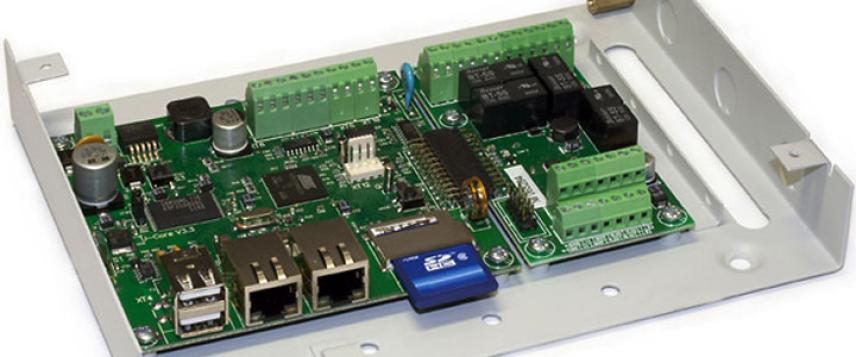
Access control to various facilities is a necessary requirement for many modern industrial and commercial facilities. Access control, employee accounting, and facility security are becoming more technically efficient, which, in turn, improves the quality of security operations. The technical specifications of individual access control and management systems may vary. The basic principle is that the access control system responds to an individual's personal data. The most popular identifiers are various cards, less commonly fingerprints or iris scans. The "brain" that controls the access control system and reads the information is the controller.
A company that installs an access control system with a controller provides all employees with a unique code (card), which is pre-programmed into the controller's memory. Upon approaching the checkpoint, an employee must scan the code from the card. Certain types of cards allow for remote identification. The pass contains personal information about the individual, including their last name, first name, job title, and access rights. Upon receiving information, the controller processes it and controls associated access systems – doors and turnstiles – by unlocking or denying access. An additional important feature of the controller is the recording and storage of employee attendance and workstation time. This gives the company's manager additional control over employee time management. Employee time spent at the workplace can be factored into payroll calculations.