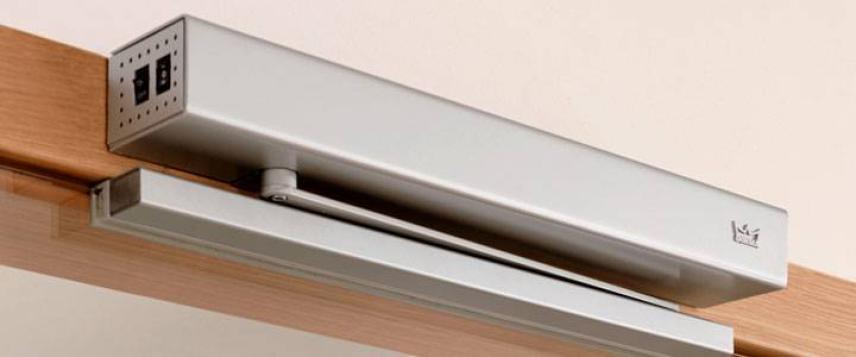
Door closers

Door closers

Door closers are auxiliary components installed in a doorway. Frequently used doors can be equipped with a closer to prevent wear and tear and prevent loose closing in the event of wind loads or fire. When it comes to fire, a tightly closed door helps reduce the spread of fire and smoke. Naturally, to protect against fire, the room must be equipped with a fire alarm.

Door closers vary in design, installation location, and closing force. The most basic door closer is a simple spring that closes the open door. Naturally, a standard spring will not provide the functionality of a full-fledged closer. A spring cannot be properly adjusted, meaning neither the force nor the closing speed can be controlled. Using a spring can result in an unwanted slamming sound when closing and rapid door wear. Unlike springs, modern closers can provide a smooth and soft closing.
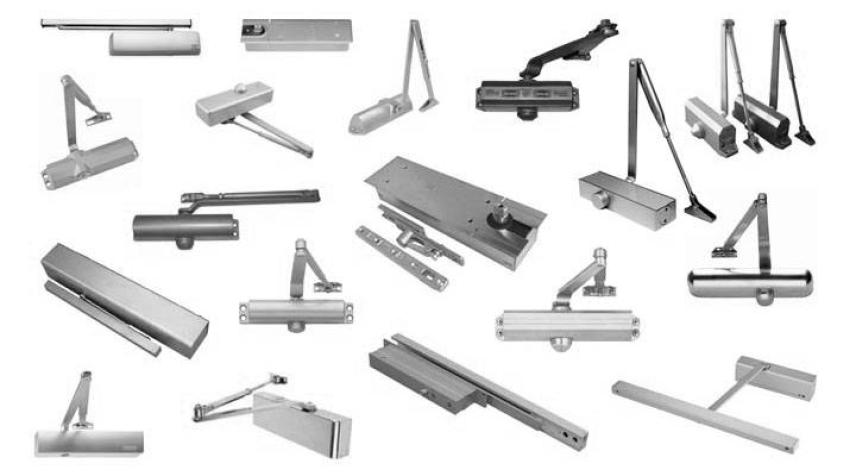
Types of door closers

When choosing a door closer, the first thing to consider is the closing force. All closers are standardized according to door weight and arm length. You can select the correct door closer with the required closing force by consulting tables in the store that list the door weight and arm width, or by using software programs available on websites.

Certain types of door closers are capable of handling the door's torque differently. The most common closers are those with a hinge or knee arm. This design handles the torque using a lever that folds smoothly during the closing process. It's worth noting that when folded, the lever protrudes perpendicular to the door when the door is closed. This makes the lever vulnerable to vandalism. Another type of door closer handles the load using a sliding channel. This design has a more compact appearance and no protruding parts. This type of closer can be expanded with a fire alarm to control a specific fire door. The most discreet type of closer is the floor closer. It doesn't attract attention due to its compact size and concealed installation. If necessary, this closer can be used with doors that open in both directions.

Like all other technical devices, door closers are adjustable. Let's look at the three most important parameters below:

  • Spring Adjustability – This parameter determines the force applied to close the door, particularly if the lock needs to be latched – at this point, the greatest force is required from the closer. The door itself also plays a role. Recommendations for choosing a closer for a specific door were given at the beginning.
  • Speed ​​Adjustment – ​​This involves manipulating the oil flow inside the closer using valves. When the door opens, oil flows out through a hole in the piston, and when the door closes, the oil returns through special channels. The valves operate by varying the rate at which oil returns to the piston's original capacity, and, consequently, the overall closing speed of the door.
  • A separate feature is the ability to lock the door in a specific position. Locking levers are used for this locking. The basic principle is that the door is manually locked in a specific opening position and also released manually. Individual models may have their own subtleties in locking adjustments, but the basic principle is outlined above.

Door closers are a modern, well-designed door accessory. If necessary, they can simplify door operation or even provide additional safety in the event of a fire. However, to ensure long-term and reliable operation of a door closer, it is essential to select it wisely, based on the technical characteristics of the door.