Deadbolt locks

Deadbolt locks

Deadbolt locks are relatively simple in design. The key to a deadbolt lock is flat and oblong, with slots and teeth on both sides – it is this shape that is used to open the lock. Deadbolt, in German, can mean a bolt, a latch, or a crossbar. Below, we'll discuss the different types of deadbolt locks, their design features, and proper use.

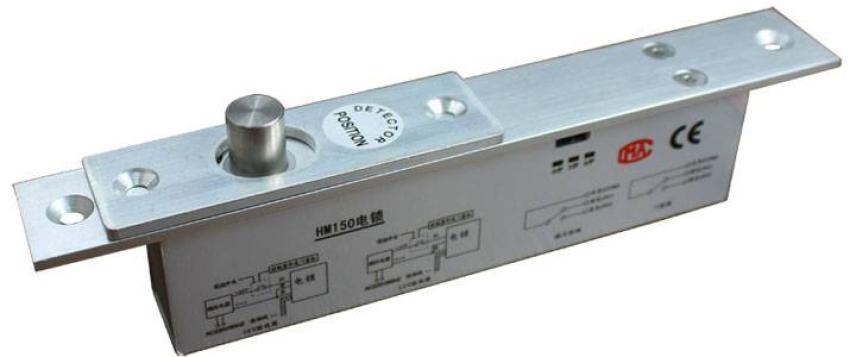
If we consider the simplest deadbolt (or garage, as it's often called) locks, the design consists of the following elements: a spring, a housing, a batten (a deadbolt with pre-cut oblique key grooves), a keyhole, a deadbolt (simply the base of the mechanism without slots), and a key. The operating principle of such a lock is as follows: the key enters the lock's entry hole, causing the rifling on the key to engage with the rifling on the deadbolt, which moves the deadbolt, pressing on the spring. In this way, the deadbolt is fixed while the key is in the lock; as soon as the key is removed, the deadbolt, which is no longer fixed, returns to its original position with the help of a spring.ное положение.

Above, we discussed the most basic deadbolt lock mechanism. However, it's worth noting that if a higher level of security is required, a more sophisticated model – one with electronics – should be selected. Electronics can include intrusion sensors (magnetic or electronic) and a wiring system. The wiring can be classified as follows:

  • Power supply wires.
  • Wires that control the opening and closing mechanism of the deadbolt lock.

An additional pair of wires may be connected to the access control device. If present, it can be used to remotely determine whether the door is open or closed. Locks with electronic systems may also have additional switches that allow you to set the open or closed time periods.

As for installing a deadbolt lock, it should be noted that installation is no more difficult than for any other lock. The main thing is to ensure that the strike plate, which secures the deadbolt when the lock is closed, is positioned as precisely as possible relative to the lock itself. This subtlety is due to the location of the opening and closing sensors, as well as the lock's magnetic catch.

Another advantage of a deadbolt lock is that if the door is accidentally slammed, it can be easily picked using improvised means. Indeed, deadbolt locks are classified as Level 1 security locks (the lowest), so any problems with them can be easily resolved in the event of an emergency.

In general, it should be noted that the range of uses for deadbolt locks can be quite broad – from garages and private homes to offices and businesses. With their simple design and operating technology, they can provide the necessary level of protection and control. However, it should be understood that if a higher level of security is required, a deadbolt lock should be used in conjunction with other types of locks.