A turnstile is a mechanism that controls and allows entry and exit of people into a facility. Functionally, a turnstile is useful for authorization upon entry or exit, as well as for payment control. The history of turnstiles spans approximately 100 years. They were first used in self-service stores in the United States. Today, there are many types of turnstiles. They vary in design, the presence or absence of electronic devices and other mechanisms, and in size – designed for a person's full height or just a meter high. In some cases, a turnstile may be equipped with a gate blocking passage for intruders. However, the above-mentioned design must be capable of emergency opening in the event of a force majeure situation.
Turnstiles
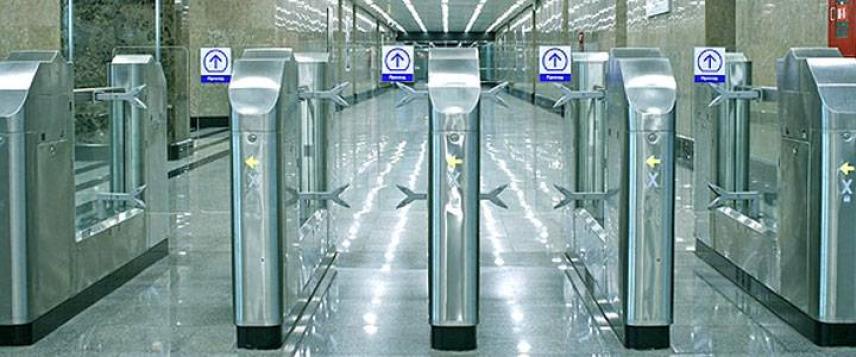

There are three main types of turnstiles. Tripods are the most common, followed by rotary turnstiles (which are classified as island or peninsula), and swing turnstiles (equipped with optics and additional sensors).
Tripods are the simplest turnstile design. The arms that delimit the passageway, typically three in number, are mounted on a special rotating drum with a downward-angled axis. One of the arms is parallel to the floor, while the other two are pointing downward and are not engaged in any way. When passing through, a person pushes the top arm, which causes the drum to rotate, and the arm lowers as the other arm snaps into place. The advantages of tripod turnstiles include their simple design, compact size, and the ability to quickly retract the arm when needed for large-scale passage in an emergency. However, it should be noted that a tripod alone is not sufficient for reliable control – arm can easily be overcome if necessary. In this case, it is advisable to create conditions for detaining the intruder if necessary.
Rotary turnstiles consist of an axis with bars attached perpendicular to the axis and parallel to each other to restrict movement. Rotary turnstiles provide the most stringent control and access control system. Both full-height and half-height versions are available. If a large number of people need to pass through, it is advisable to install several of these turnstiles. Half-height turnstiles blend well with interior design.
Flap turnstiles are a more advanced model, using electronic units and sensors to notify when a person has passed through. While sensors are optional in other turnstiles, they are essential in flip turnstiles to prevent multiple people from passing while the turnstiles are open. The operating principle may also vary: the turnstiles may open and close only when a specific situation arises, or, conversely, open only when passage is required.
The basic types of turnstile designs are listed above, but there are many more variations in appearance and technical specifications. It's important to understand that the most appropriate turnstile can be selected only based on the conditions and requirements of a specific secure facility.