Fences

Security fences

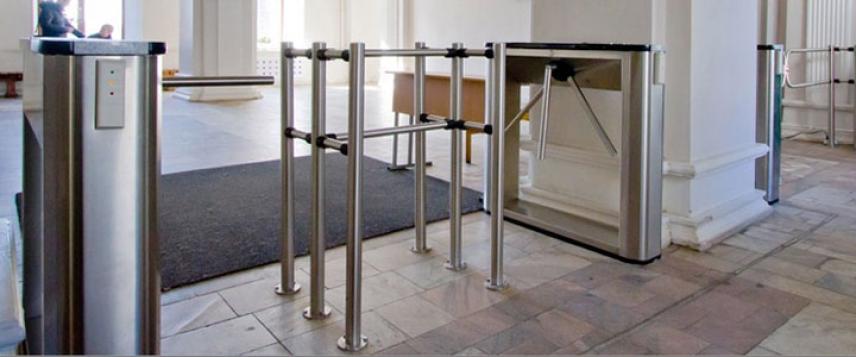
Security system technologies today can serve a wide variety of purposes. This article will focus on fencing, which relates to access control, traffic management, human circulation, and human flow management. Security fencing is present in many public buildings today, including train stations, airports, and other public transportation facilities. It can also be found in stores and supermarkets. Fencing is often used in administrative buildings and government agencies. The range of interior fencing options is quite diverse, but it's crucial that the design of the selected fencing matches the functionality and type of facility where it will be installed.

The technical purpose of fencing is to restrict and control the movement of people, often acting as a complement to turnstiles. When using this technique, the visual impact of the interior should be considered. The fencing should be perceived as a unified whole with the checkpoint and not disrupt the existing interior design. For this purpose, in certain cases, fences can be purchased together with an access control system.
Types of security fencing

Enclosing structures offer a wide range of technical enhancements, fastening systems, and brackets that ensure installation with minimal effort and time, as well as allow the fence to be optimally configured within the existing floor plan. Installation is quite simple and will not disrupt the interior space or the building's structural elements. Enclosing structures can be secured directly to the concrete floor using anchor bolts or other similar methods.

A typical fence design is quite simple. It typically consists of sections, each section measuring between 1 and 1.5 meters. Sections can be connected at the required angles, most commonly 0°, 30°, or 90°.

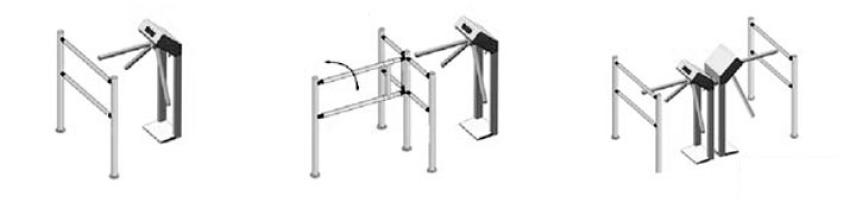
Fencing structures may include additional joints. The essence of such a joint lies not in the continuous section of the fence, but rather at the points of entry, exit, or passage.

  • A stand with a reader – this system is suitable for banks and offices where access control is required.
  • A stand with a tensioner (a stand with a retractable belt) – this stand is designed to organize passageways in offices, airports, and other locations where a restricted area is required.
  • Turnstile railing (available in double and semicircular versions) – a double turnstile railing is used for freestanding turnstiles. This design, like the reader stand, is ideal for enterprise access control systems. A semicircular barrier is installed on the back of the turnstile and is best suited for conditions requiring the passage of large numbers of people.
  • Fire passage – this barrier assembly is designed for emergency mass passage of people without passing through the turnstile.

Ensuring the accumulation and distribution functions at the entrance and exit is usually achieved using barriers. Barriers clearly define the boundaries of movement and passage of large numbers of people. If necessary, the structural components of modern barriers can allow for mass passage of people in a critical situation. This will prevent panic and casualties and ensure the rapid passage of large numbers of people.