In fire protection systems, sensors are commonly referred to as sensitive elements responsible for receiving information and converting it into an electrical signal. Sensors operate by detecting physical changes in a room, such as sound, temperature, or smoke. When exposed to external factors, sensors transmit a processed signal via wired or wireless connections. It should be noted that the term "sensor" is not entirely accurate, as a sensor is only part of a fire alarm system, although the term "sensor" is often used where the term "detector" should be used. A sensor itself is part of the system, and its primary function is to receive a signal. The functions of a "detector," however, can vary considerably depending on the model. These functions generally include signal processing and transmission, and, less commonly, activation of the fire suppression system.
Fire Detectors
Having understood the ultimate purpose of an alarm – sending a signal – we need to discuss the different types of signals:
- Dual-mode signal – an alarm can signal both a fire and its absence. The "no fire" signal may seem unimportant at first glance, but its presence is actually an indicator of the fire system's proper operation.
- Multi-mode signals – an alarm can transmit information about the nature of a malfunction and even the presence of debris in the alarm itself. There are two types of transmission options: the signal is transmitted via a cable or wirelessly.
It's also worth noting how different alarms respond to changes in the monitored parameter, i.e., fire outbreak conditions:
- The maximum critical condition required to trigger a threshold detector, for example, a rise in temperature to a critical level.
- Reacting to changes in the monitored parameter is the operating principle of a differential detector.
- Combined detectors – incorporate the capabilities of the first two.
According to the placement criteria on the site, detectors are divided into three types:
- Point – a detector with a sensor for monitoring a specific location.
- Multipoint – involves connecting multiple sensors to a single detector.
- Linear – for monitoring along a specific line.
The main criterion for classifying detector operating principles is the impact that triggers the device:
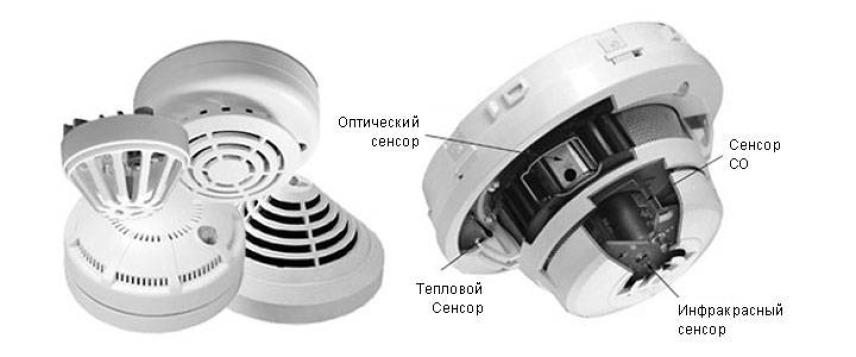
- Thermal – respond to changes in room temperature. This type of device is installed in facilities where a fire causes a large heat release, such as a fuel and lubricants warehouse. The use of such detectors in administrative buildings or domestic spaces is prohibited.
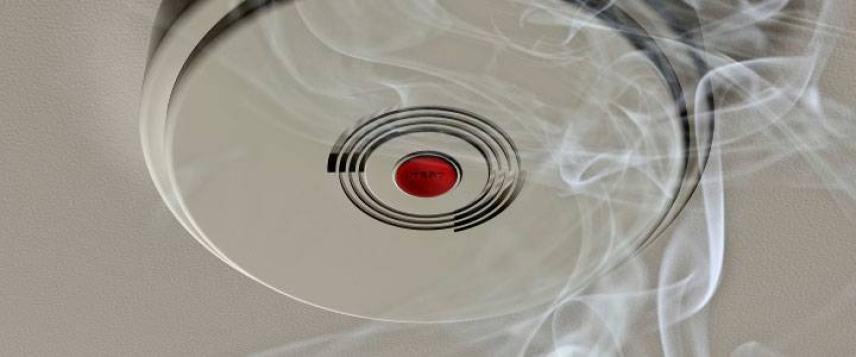
- Smoke detectors are the most common. A signal is generated when combustion products reach the detector.
- Detectors that respond to infrared radiation from flames. Such devices are used in environments where the risk of fire is high, and the use of the two previous types of emitters is impractical.
After reviewing the necessary conditions for reliable operation of a detector, or more correctly, an alarm, and identifying the types and styles of detectors, you can decide which option is most suitable. There are an infinite number of facilities requiring fire safety, and it is up to you, as the owner, to determine the level of your fire safety.