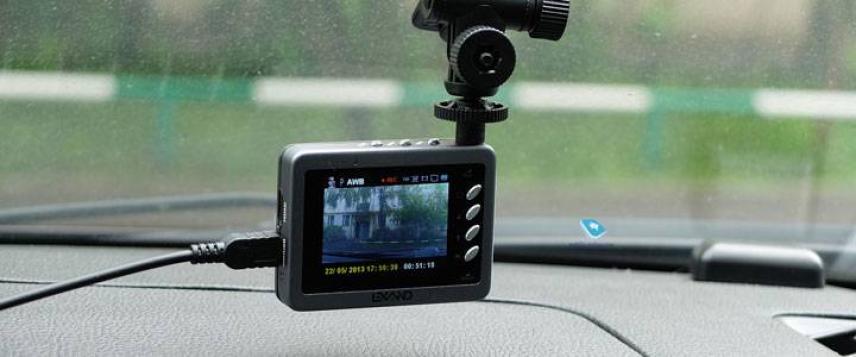
Car DVRs

Car DVR

Car dashcams are designed to record the situation while driving, as well as inside the vehicle. Recording from a car dashcam during an accident can help resolve any conflicts that arise. To choose a dashcam wisely, you need to understand that you're investing in your own safety – saving money now could cost you much more in the long run, both financially and emotionally.

Modern car dashcams vary in a number of ways, including the number of cameras, video resolution, the storage media the dashcam records to, the presence or absence of an audio recording device (microphone), the presence or absence of a monitor, and more. More modern models record information to a memory card similar to those used in mobile phones, making it easier to retrieve the information, and the presence of a display allows you to review the footage directly at the scene of the accident, if necessary.
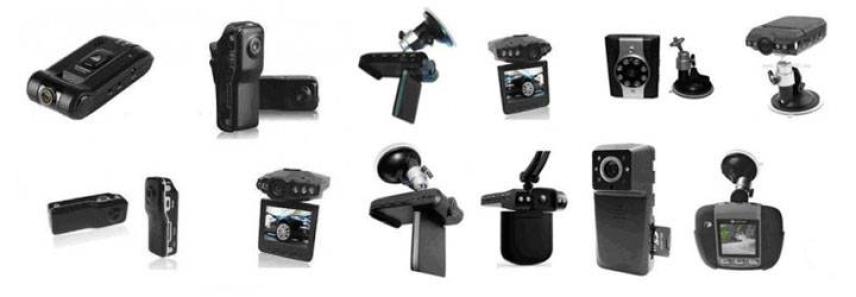
Types and kinds of car recorders

There are several different types of dash cams based on their design. Three main types can be distinguished: smartphone-based dash cams, standalone dash cams, and multi-channel dash cams.

Smartphone-based dash cams allow you to use your smartphone directly. The advantage of this type of dash cam is that smartphones typically have built-in cameras – of fairly good quality – and are connected to Wi-Fi and a GPS navigator. A significant drawback is the inability to record video during a call.

Standalone dash cams are characterized by being a single unit with a specific number of cameras, sensors, and a memory card. The advantage of this type of dash cam is its reasonable price and easy installation on the vehicle.

Multi-channel dash cams are distinguished by their inherent recording device, which requires connecting sensors and additional cameras. The number of cameras can range from two to four. Multi-channel car dash cams are complex to operate, require significant power consumption, and require significant maintenance – in short, they're expensive.

Parameters to consider when recording with a dash cam include resolution, interpolation issues, functionality, and so on.

Resolution is an indicator of the image quality captured during recording – in other words, its detail and clarity. Dash cam recording resolutions can range from 640x480 to 1280x960 pixels. However, interpolation may be present. Interpolation is the process of stretching the image when using lower-quality recordings. It's important to understand that when purchasing a dash cam, the numbers aren't the only consideration. To avoid this, you should research your chosen model online and read reviews or even video reviews. Another small tip to consider when choosing a dash cam: the optimal viewing angle is 120-148°. Anything higher will severely distort the image, while a smaller angle will significantly narrow the field of view and reduce peripheral vision. Next, it's worth mentioning the recording frame rate: the higher it is, the sharper the required freeze frame will be. There's an inverse relationship here: the higher the resolution, the lower the frame rate. Unfortunately, in this case, you have to compromise somewhere. It's worth noting that a frame rate of 15-20 frames per second is insufficient; it makes it difficult to capture a high-quality freeze frame if necessary. As for LED backlighting, which is used in the dark, its benefit is negligible; the illumination range is only a few meters. Overall, few dash cam models are capable of recording clearly in the dark. A GPS navigator is an essential accessory that can make your life much easier in the event of an accident. It can be used not only to determine your location but also to record the location of recorded footage.

In conclusion, it's worth noting that determining the right type of dash cam isn't difficult, but it does require some knowledge. It's also important to thoroughly research the model you're interested in and read reviews from people who have already used it.